 CourtHeath Consulting
 CourtHeath Consulting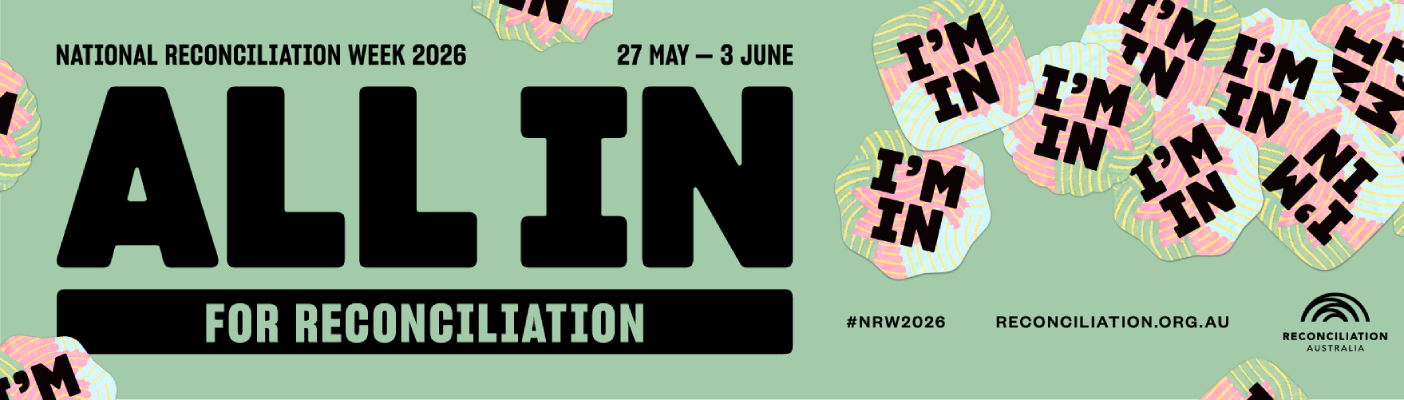
“National Reconciliation Week is a time for all Australians to learn about our shared histories, cultures, and achievements, and to explore how each of us can contribute to achieving reconciliation in Australia.” – Reconciliation Australia
This year’s NRW theme, All In, encourages people to move beyond observation and consider how reconciliation can be practised actively, thoughtfully and meaningfully in everyday life.
In this blog, we explore the history of National Reconciliation Week (NRW), this year’s theme, key commemorative dates, and how individuals and organisations can participate. We also recognise the significance of Reconciliation Australia’s 25th anniversary.
What is National Reconciliation Week?
National Reconciliation Week, held every year from 27 May to 3 June, is a national time of learning, reflection, and community engagement focused on reconciliation. According to Reconciliation Australia, reconciliation is not a singular outcome but a process of “strengthening relationships between Aboriginal and Torres Strait Islander peoples and non-Indigenous peoples, for the benefit of all Australians.” This includes acknowledging the histories of land dispossession, violence, systemic racism, and cultural survival, alongside recognising the many individuals, communities, and organisations who have worked to foster understanding, truth-telling, and positive change.
For Reconciliation Australia, reconciliation is a process made up of five interrelated dimensions:
- Historical acceptance
- Race relations
- Equality and equity
- Institutional integrity
- Unity.
“These five dimensions do not exist in isolation, but are interrelated. Reconciliation cannot be seen as a single issue or agenda; the contemporary definition of reconciliation must weave all of these threads together. For example, greater historical acceptance of the wrongs done to Aboriginal and Torres Strait Islander people can lead to improved race relations, which in turn leads to greater equality and equity.”
NRW encourages people to learn more about Australia’s histories and cultures, to strengthen respectful relationships, and to think about how reconciliation can be supported in homes, workplaces, schools, and communities.
All In
The 2026 theme, All In, is centred on the idea that reconciliation requires participation from everybody; that reconciliation is something active rather than symbolic. It suggests that respectful relationships, equity, and justice are built through ongoing actions, conversations, and commitments over time.
Importantly, the 2026 campaign also recognises that Aboriginal and Torres Strait Islander peoples have carried much of the work of advocacy, education, and truth-telling for generations; the All In theme encouraging non-Indigenous Australians to share responsibility for reconciliation more fully.
The language of All In also reflects a collective approach. Rather than focusing only on institutions or governments, it points to the role individuals, workplaces, schools, organisations, and communities can all play in contributing to change.
Key commemorative dates
The dates of NRW mark two significant moments in Australian history:
- 1967 Referendum: On 27 May 1967, more than 90% of Australians voted in a national referendum to remove discriminatory clauses from the Australian Constitution relating to Aboriginal and Torres Strait Islander peoples.
- Mabo Native Title Decision: NRW ends on 3 June, marking the anniversary of the 1992 High Court Mabo decision. The decision recognised native title and acknowledged that Aboriginal and Torres Strait Islander peoples’ connection to Country continued after British colonisation. It also overturned the legal concept of terra nullius (land belonging to no one) and laid the foundation for the Native Title Act 1993.
Getting involved in NRW 2026
NRW provides many ways for people to participate, learn, and contribute. Across Australia, organisations, and communities host public and private events including cultural programs, panel discussions, exhibitions, learning sessions, performances, and community gathering. To discover ways you and or your organisations can get involved in Victoria, visit:
- City of Melbourne: Oration 2026, featuring a keynote oration on 28 May, from highly respected Wurundjeri community members Margaret Parisi and Dr. Mandy Nicholson
- Federation Square: NRW 2026 events
- Reconciliation Australia: NRW Events Calendar 2026
- Selected community events: In Melbourne, Australia.
Reconciliation Australia’s 25th Anniversary
NRW 2026 also coincides with the 25th anniversary of Reconciliation Australia. Established in 2001, the organisation provides national leadership on reconciliation and supports initiatives across workplaces, education, community organisations, and public life.
Says CEO, Karen Mundine: “After 25 years, one thing is clear. If reconciliation is to succeed, it will require all of us to be All In. As the theme for National Reconciliation Week 2026, All In is a call to move beyond passive support and into active participation – challenging individuals, organisations and governments to contribute to meaningful, lasting change.”
Resources (Reconciliation Australia)
- 25 years of Reconciliation Australia
- National Reconciliation Week 2026
- National Reconciliation Week Factsheet
***
In February 2025, CourtHeath Consulting launched its Reconciliation Action Plan, Bridges of Connection – a Reflect RAP grounded in respect, listening, partnering, connecting, learning, and evolving. These core principles continue to guide our reconciliation journey. To read more about our RAP, please visit our website here.
***
CourtHeath acknowledges the Traditional Aboriginal Owners of Country throughout Victoria and pays respect to Elders past and present, and to the ongoing living culture of Aboriginal people.
A participant in the UN Global Compact, CourtHeath seeks to raise awareness about the sustainable development goals and the principles of the Global Compact with business and government organisations in Victoria.
***
[category courtheath's blog]
