 CourtHeath Consulting
 CourtHeath Consulting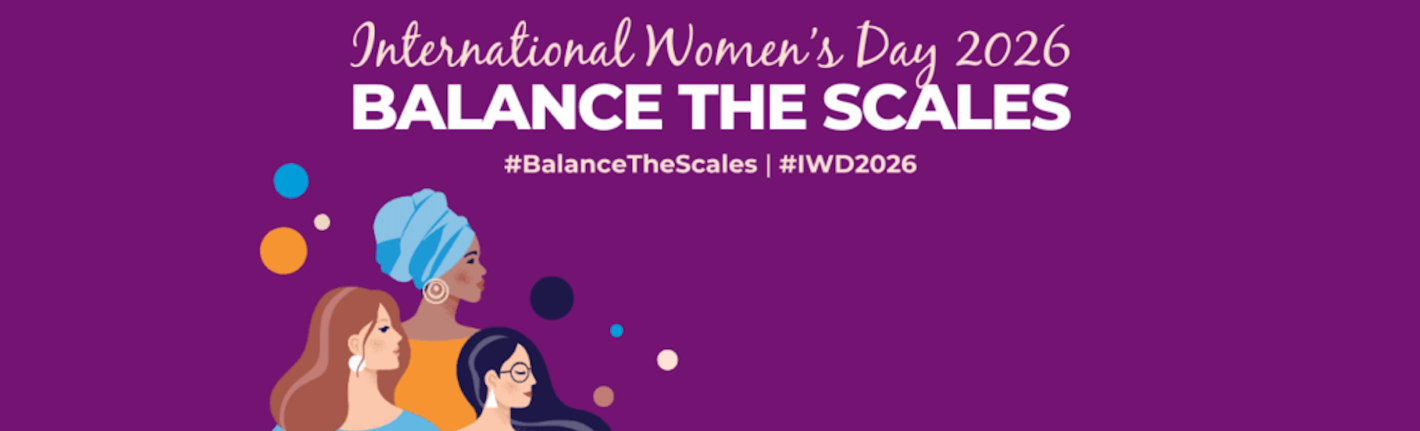
Today, 8 March 2026, marks International Women's Day (IWD), a global celebration of women's social, economic, cultural, and political achievements. This year, we’re exploring two complementary themes that frame the day: the global call to “Give To Gain”, and the UN Women Australia’s theme, “Balance the Scales” for all women and girls.
For more than a century, International Women's Day has recognised women's contributions and championed gender equality. Originating from early 20th century labour movements in North America and Europe, it grew into a global movement for women's rights. In 2026, as the movement enters its 115th year, the focus turns sharply to the persistent gap between the rights women are promised and the justice they actually receive.
“[Today], UN Women issues a global alert: justice systems meant to uphold rights and the rule of law are failing women and girls everywhere. Women globally hold just 64 per cent of the legal rights of men, exposing them to discrimination, violence, and exclusion at every stage of their lives.”
Give To Gain: A global call to generosity
The global IWD 2026 theme invites a fundamental shift in how we think about advancing gender equality. Rather than framing progress as a zero-sum equation, “Give To Gain” emphasises reciprocity and abundance – the idea that when we invest in women and girls, everyone benefits. Giving is not a subtraction; it is, as the campaign puts it, intentional multiplication.
Giving can take many forms: donations, knowledge, visibility, mentoring, advocacy, time, or resources. Whether as individuals, organisations, or communities, every contribution to women's advancement helps build a more equitable and interconnected world. The campaign encourages open hearts and open minds, recognising that generosity creates a ripple effect far beyond any single act. Everyday, everywhere, the question the campaign poses is the same: What will you give to gain gender equality?
How could you give to gain?
As individuals, giving support could mean calling out stereotypes, challenging discrimination, questioning bias, and celebrating women's success. And it could also mean sharing knowledge, offering encouragement, and using your own spheres of influence to create change. At work, at home, and in the community, there are countless ways to overtly advance women and girls.
Give respect. Give visibility. Give mentoring. Give equal pay. Give opportunities. Give time. The list is as varied as the people who make up this global movement – and each act of giving matters.
Balance the Scales: For ALL women and girls
Late last year, UN Women Australia announced “Balance the Scales” for ALL women and girls as its official IWD 2026 theme, describing it as a commitment to ensuring fair, inclusive, and accessible justice for every woman and girl in Australia and beyond.
The statistics are sobering. One in three women worldwide will experience physical or sexual violence in their lifetime, yet most will never seek formal help or justice. In New South Wales, the conviction rate for sexual assault stands at just 11%. In Victoria, research indicates that approximately one in seven (or 14%) of sexual assaults reported to Victoria Police are ultimately proven in court (Crime Statistics Agency). These figures expose the vast gulf between legal protections on paper and real outcomes for survivors.
According to UN Women Australia’s CEO, Simone Clarke, this year’s theme, “is a promise for every woman and girl to be safe, heard, and free to shape her own future. In 2026, unjust laws, policies, and ingrained barriers still stand in the way of fair and inclusive communities. This International Women's Day, we are calling on Australians to join a movement for real action – to transform our justice systems, amplify marginalised voices, and ensure equality is not the exception, but the rule.”
First Nations women and the justice gap
The theme carries particular weight for First Nations women, who face compounding and intersecting disadvantages: overrepresentation in the justice system, intergenerational trauma, and limited access to culturally safe legal support. According to the UN Women Australia article, First Nations women are 34 times more likely to be hospitalised due to family violence than non-Indigenous women. Meaningful change requires community-led, self-determined pathways that centre First Nations leadership.
Conclusion
International Women's Day 2026 calls on all of us – as individuals, communities, and institutions – to give generously where we can, and work to ensure that justice systems serve every woman and girl equally.
Resources
- International Women's Day Theme (International Women’s Day)
- UN Women Australia announces 2026 International Women's Day theme: “Balance the Scales” (UN Women Australia)
***
CourtHeath acknowledges the Traditional Aboriginal Owners of Country throughout Victoria and pays respect to Elders past and present, and to the ongoing living culture of Aboriginal people.
A participant in the UN Global Compact, CourtHeath seeks to raise awareness about the sustainable development goals and the principles of the Global Compact with business and government organisations in Victoria.
***
[category courtheath's blog]
